Kodaikanal Wildlife Sanctuary, nestled in the southern part of the Western Ghats in Tamil Nadu, is a remarkable haven of biodiversity and natural beauty. Located in the Dindigul district, this sanctuary spans an area of approximately 608 square kilometers. Known for its lush green forests, diverse wildlife, and scenic landscapes, Kodaikanal Wildlife Sanctuary is a paradise for nature lovers, wildlife enthusiasts, and adventure seekers.
Kodaikanal Wildlife Sanctuary promotes sustainable ecotourism through various Ecotourism Committees that actively involve local village communities. These committees play a vital role in conservation, visitor management, nature interpretation, and livelihood generation, ensuring that tourism benefits both the environment and local people.
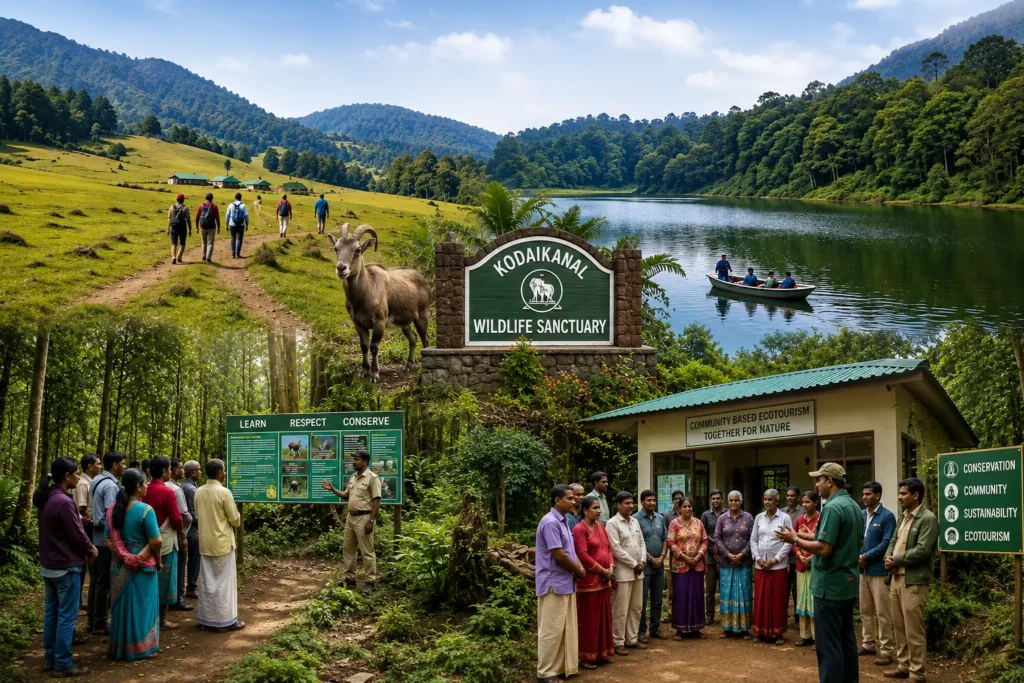
The 12-Mile Road circuit is one of the most popular ecotourism stretches managed by the Pambarpuram Village Forest Council. This scenic route bundles four of Kodaikanal’s iconic natural landmarks into a single corridor: the towering granite massifs of Pillar Rocks, the deep cavernous formations of Guna Caves (historically known as Devil’s Kitchen), the tranquil and atmospheric Pine Forest, and Moir Point, which offers a sweeping panoramic vista of the valleys below. It provides a perfect blend of unique geological formations, dense forest trails, and cloud-kissed valley overlooks.
Berijam Lake is a serene, high-altitude freshwater reservoir situated inside the deeply protected core forest zone of the sanctuary. Because it is a vital habitat for endemic wildlife and serves as a major drinking water source for the valleys below, entry is highly restricted and managed directly via official Tamil Nadu Forest Department van safaris. The surrounding ecosystem consists of pristine montane shola forest tracts and rolling hills, making it a spectacular haven for serious birdwatchers and nature enthusiasts hoping to spot rare species or catch a glimpse of grazing Indian Gaur.
Located roughly 35 kilometers from the Kodaikanal town, Mannavanur Lake is a pristine, high-altitude water body nestled amidst vast, rolling grassland meadows and pockets of native shola forests. This peaceful zone acts as an essential wetland ecosystem supporting diverse local flora and fauna. Visitors can engage in a variety of low-impact eco-adventures here, including traditional coracle rides on the emerald waters, kayaking, horse riding along the banks, and a 250-meter zipline that offers a thrilling bird’s-eye view of the grasslands.
Situated at the foothills of the Palani Hills along the lower fringes of the sanctuary near Periyakulam, Kumbakarai Falls is a beautiful natural waterfall formed by the pristine waters originating in the Kodaikanal peaks. The water cascades down in two distinct stages, pooling into natural rock bowls that are surrounded by thick, semi-evergreen riverine forests. It serves as a refreshing eco-tourism spot that highlights the dramatic altitudinal shifts of the wildlife sanctuary, transitioning from the chilly upper plateaus to the warm, biological diversity of the lower deciduous slopes.
Dum-Dum Parai View Point is a striking roadside vantage point located along the primary ghat road leading up to the Kodaikanal hills. It offers an incredible, unobstructed panoramic vista of the Manjalar dam, deep valleys, steep rock faces, and the cascading Thalaiyar Falls (also known as Rat Tail Falls) in the distance. The viewpoint gets its unique historical name from the ancient practice of beating drums (“dum-dum”) to alert nearby villagers and travelers about the movement of wild animals or regal processions along the mountain passes.
Ecological Integrity: Prioritizing the health of endemic flora and fauna over high-volume tourism footprints.
Community Autonomy: Ensuring local indigenous populations derive direct economic and social benefits from tourism revenue.
Authentic Education: Shifting the visitor experience from mere sightseeing to deep, immersive environmental awareness.
Hydrological Responsibility: Safeguarding the 19 perennial streams originating here that act as lifelines for the surrounding plains.
Sustainable ecotourism at Kodaikanal Wildlife Sanctuary is driven by a unique partnership between the Tamil Nadu Forest Department and local forest-fringe communities. At the heart of this collaborative network are Ecotourism Management Committees (ETMCs) and Ecodevelopment Committees (EDCs), which serve to balance conservation with local economic growth. By entrusting destination management to Local Women Self-Help Groups, the sanctuary turns tourism into a powerful tool for generating continued employment, promoting ecological awareness, and preserving our vulnerable natural resources.
The Following ETMCs manage Ecotourism activities in Kodaikanal Wildlife Sanctuary.
The architecture of sustainable ecotourism within the Kodaikanal Wildlife Sanctuary relies heavily on grassroots democratic governance via Village Forest Councils (VFCs). VFCs initiated by the Tamil Nadu Forest Department, serve as a collaborative bridge between forest authorities and indigenous community members. Local Forest Range Officers act as Member-Secretaries to guide these councils. This dynamic ensures that residents of fringe villages are not just passive observers but are actively invested in planning, executing, and protecting the rich flora and fauna of their home turf.
The Following VFCs manage Ecotourism activities in Kodaikanal Wildlife Sanctuary.
Copyright © Kodaikanal wildlife Sanctuary. All Rights Reserved